Sunday, February 18, 2007

Bawdy Moroccan Music: Taixor and Berkaniya


I found this by reading some comments on 'Aqoul. Check out this uploaded telecast of Moroccan artists Taixor and Berkaniya singing "Khalli babak mahloul" (Leave your door open). Here's the translation of the lyrics, courtesy of Faycal:

Taixor (the guy) : Leave your door open; I am planning on spending the night. You know I am crazy. I am wild about girls.

Berkaniya (the girl) : Consider it your home. Do come, you are very welcome. If the door’s locked just knock and I’ll open it.

Taixor : I am afraid of the neighbors ! If they tell my wife, she’s going to make a scene.

Berkaniya : Come at midnight when everyone’s asleep. Don’t bring the car. That way you don’t make any noise.

Taixor : I will take the bus and walk the rest of the way. If the police catch us, tell them that I am your husband.

Berkaniya: Don’t worry about the cops or the gendarmes. My uncle is a superintendent. He’ll settle the situation.

Taixor : I will bring a Coke or some juices, and if I can maybe some beers too.

Berkaniya : I don’t want to drink. Just bring enough for you. I just crave some bread and some kefta (ground meat)

And Faycal comments: "what really struck me while translating was the last line. A girl saying: I just want some bread and meat. It's shocking not only because I don't see a western girl saying that, I don't see a bourgeois arab girl saying it either. This rabelaisian gluttony is really only acceptable within the innards of popular culture (culture populaire)."

Tuesday, December 26, 2006

fat planet on palestinian hip-hop

the great fat planet's post on Palestinian hip-hop, focusing on Ramallah Underground, with good mp3's to download.

Sunday, December 03, 2006

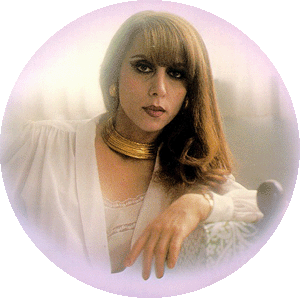
Fairuz in Beirut, 2


Another account of Fairouz's performance of Sah al-Nom in Beirut, by the inimitable Jim Quilty, writing in the Daily Star (Beirut).

Musical comedy, both timeless and timely
Fairouz returns to Beirut stage with a revival of the Rahbani brothers' 'Sah al-Nom'

By Jim Quilty
Daily Star staff
Monday, December 04, 2006

BEIRUT: "Sah al-Nom," a musical comedy starring Fairouz, directed by Ziad Rahbani and written by Assi and Mansour Rahbani, began a three-night run at the Beirut International Exhibition and Leisure Center (BIEL) on Friday night. It opened to somewhat less than a capacity crowd, a fact that says more about the prevailing political environment than the reputation and popularity of the artists involved.

Like so much of the Rahbani brothers' work, this play could be termed an allegorical fairytale. The writer-composers favored village idylls for their settings - places where folks burst into choral song at the drop of a hat and fall naturally into dabkeh-inflected dance.

"Sah al-Nom" is set in such a place. At center stage is a grand villa, in miniature, called the "Qasr al-Nom" (the Palace of Sleep) where the aging local wali (or lord) lives, apparently spending most of his time sleeping.

From time to time, though, he does rouse himself to actually rule. With great ceremony, he and his retainers assemble a court in the village square and hold a diwan where the villagers can approach him with their petitions.

The lord isn't exactly the model of enlightened governance. He listens to the villagers' petitions but seems as likely to relieve a petitioner of some possession he has taken a fancy to as to grant his wish. If it suits him, though, the lord grants the supplicant's wishes and stamps the document with his much-prized royal seal.

While most of the villagers seem content with their lot, one umbrella-toting village girl named Rumfoul (Fairouz) is a nagging inconvenience to the wali. Forever petitioning to have the roof of her house fixed, she carries the umbrella, she explains, to protect her from the elements.

Exhausted after listening to a few supplicants, the lord orders his retainers to leave him to sleep outside in his throne. Once he's asleep, Rumfoul swipes his royal seal and stamps the petitions of all the supplicants - all but one. Mischief done, she throws the seal down a well.

In Act II the wali wakes up from another long slumber and repeats the diwan ritual, only to realize his seal is missing. This causes all manner of grief and confusion, since without the seal he has no authority to rule.

One of the villagers - whose petition Rumfoul has torn up - suspects she has the seal and squeals on her. The lord confronts her and she admits to having thrown the seal down the well. With the help of the other villagers, then, she goes into the well to retrieve it.

The wali is so delighted to have regained his authority that, rather than having Rumfoul put in irons, he makes her the keeper of his seal when he's asleep. "When you were in the well," he says, "I wasn't thinking about the seal at all. I was worried about you."

There are any number of ways to approach "Sah al-Nom." It is, first of all, populist political satire - critical, then, but entertaining as well.

As a piece of restored popular theater, the revival's production values are about as sharp as you could hope for - particularly in the acoustic nightmare that is BIEL. The stage design of faux "mountain architecture" looks more genuine than some of the restored buildings in Solidere and the performance seems utterly true to the stage conventions of the 1960s and 70s.

Like the Rahbanis' music, the costuming is folksy and contemporary at once. The dancing (there's plenty of that) is crisp and tasteful, without the excesses of the more self-conscious neo-folk dance productions. The acting is both stylised and folksy and the spoken and sung text blends about as seamlessly as possible.

There were those in the audience who were of the opinion that the songs were performed in playback - "lip-synching" for those of the Milli Vanilli generation. These opinions couldn't be confirmed or denied when The Daily Star went to press.

If these songs were indeed taped in the studio before the show, though, the stage direction ensured that they were not obviously so. Nor is it difficult to discern why there would be pressure to pre-record - one informed estimate has it that Nouhad Haddad, the woman who became Fairouz, was born in 1935.

A lot has happened since this sweet little riff on Lebanon's neo-feudal political system was first staged 36 years ago.

On one hand Fairouz, the Rahbani brothers and Ziad Rahbani became cultural icons without peer in Lebanon. The distinction comes from the fact that, though their work has been politically engaged, they continued to be loved by Lebanese regardless of their sectarian, tribal or class association.

As such, their stature harkens back to a period when the things that divided Lebanese seemed less important than what unified them - whether to one another, the Palestinians or the wider Arab world.

"Sah al-Nom" - the plays of Assi and Mansour Rahbani generally, in fact - has thus accumulated layers of significance that make it a good deal thicker than it was when originally devised.

This musical's weight increases still more when you augment these combined layers of meaning with the piece's recent production history.

The Baalbek Festival announced that "Sah al-Nom" would open its 2006 season. When Baalbek fell victim to the July-August war with Israel, the metaphorical weight, especially for Lebanese of a certain generation, was much greater than you'd ascribe to a mere play.

Baalbek announced that it would stage the play in December - before anyone knew that the opening night would correspond with an open-ended opposition sit-in involving hundreds of thousands of Lebanese in Downtown Beirut.

By the time it opened on Friday evening, then, this work of childlike playfulness had become the artistic equivalent of a black hole - a play that absorbs any meaning you care to project onto it.

All the more reason, arguably, that the star's voice should sound as strong as possible.

It is highly informative of the Lebanese condition that (based on the number of times the audience burst into applause on Friday evening) "Sah al-Nom" still resonates with audiences in late 2006.

The orange tinge of Rumfoul's dress and umbrella, on the other hand, was surely no more than a trick of the stage lights.

Fayrouz performs in Beirut


New York Times, December 3, 2006
A Diva Brightens a Dark Time in Beirut
By KATHERINE ZOEPF

BEIRUT, Lebanon, Dec. 2 — As she stepped onto the stage, a tiny figure in apricot-colored silk, some in the audience broke into tears, while others clapped and cheered. As she lifted her lace parasol, turned her famous hooded eyes to the balcony, and her song began, ululations of joy erupted from several elderly Lebanese ladies in formal evening dress seated near the stage.

Fayrouz was performing in Beirut again at last, and her country, it seemed, had never needed her more.

In recent days, armored personnel carriers have moved into position along highway on-ramps, at major Beirut intersections and on a bridge overlooking the Hezbollah demonstrators at Martyrs’ Square, and fears and rumors that civil war might return have swirled. All the while, Beirutis of every sectarian stripe seemed to agree on this: Fayrouz must sing as planned.

In the Arab world, the emotional resonance this 70ish diva commands is difficult to overstate. Many of the great anthems of Palestinian and Lebanese nationalism — not factionalism — are her songs. Passengers on cheap overnight buses between Syrian cities know that morning has come and their destination lies near when the driver turns on Fayrouz.

From Damascus to Ramalla to Amman, Fayrouz’s unmistakable deep, quavering tones echo from radios and tape decks in cafes, shops and taxi cabs, reminding people of the long-lost rhythms of village life and the longer-lost, golden years of peace.

“Fayrouz is the music of our lives,” said a young Arab Israeli man in Haifa last week, who gave his name as Said. “She plays from dawn till midnight, every day, everywhere we go. She is the symbol of Lebanon and of Palestine. We all love her.”

Just how true that is in Lebanon seemed clear on Friday night, as she took the stage before tens of thousands of people at a convention center on the Beirut waterfront, to perform in “Sah el Nom,” a musical comedy. They had braved the demonstrations, blocked roads and multiple security checks to occupy white plastic chairs while scores of soldiers with AK-47s patrolled outside.

Some came from Beirut, some from Saida, a mainly Sunni town considered the gateway to southern Lebanon. Rosine Hajjar, 28, a psychotherapist from the Bekaa Valley, a predominantly Shiite region, said she had planned and saved for months for this night.

“Fayrouz is a dream for all Lebanese people,” Ms. Hajjar said. “She is majestic, she is mysterious, and it is very rare to see her. There were so many rumors this weekend of a coup d’état. But Fayrouz refused to cancel, and my sisters and I are so happy. Whether there is a new civil war or not, I feel sure that this will be the first and last time in my life that I will ever see her.”

Amal Hachem, 29, a lawyer from a Christian neighborhood in Beirut, said: “The fact that Fayrouz went ahead with this means a lot for Lebanese people. She is the symbol of Lebanon. Lebanon in war, Lebanon in peace, and Lebanon in revolution. She brings us together.”

“Sah el Nom” concerns a self-serving king who demands impossible favors when his people ask for help, but who comes to change his ways through the intervention of a good, brave village woman, played by Fayrouz.

But even symbolism and inspiration sometimes have to take a back seat to age and the sound requirements of a convention center. As the performance progressed, there were hisses and whispers — soon hushed by diehard admirers — as her lips occasionally moved out of time to the voice singing from the speakers, or as she focused on dancing, and the voice sang on.

Born more than 70 years ago — no one seems certain just how many — as Nouhad Haddad, she was dubbed Fayrouz, or Turquoise, by an early musical mentor. For more than 50 years, she and several family members — her husband, the composer Assi Rahbani, his brother Mansour, a lyricist, and a son, Ziad — have been the musical royal family of the Levant. The Rahbani brothers wrote most of the material that Fayrouz has regularly performed throughout her career, including “Sah el Nom.”

They are the rarest of public figures in Lebanon: artists whose standing is above politics. Throughout the 15 years of Lebanon’s civil war, they never took sides.

Fayrouz was to sing in “Sah el Nom” at the ancient Roman acropolis in Baalbeck, where an international music, theater and dance festival is held each summer. But the Israeli-Hezbollah war began that very evening, and the performance was canceled.

Throughout the 34-day war, Fayrouz’s patriotic songs, including “To Beirut” and “The True Lebanon Is Coming,” were everywhere. But she never appeared.

The festival’s organizers decided to move the program to Beirut. Fayrouz had not performed here since 1994, and ticket sales were frantic.

May Arida, the festival’s president, watched as the audience filed in on Friday night. “We knew there would be some fear,” she said. “We didn’t make the decision until yesterday, but we finally decided that the show must go on. In a difficult time, we need Fayrouz.”

Thursday, November 09, 2006

Sapho, French-Moroccan-Jewish singer, in Beirut


"French-Moroccan singer Sapho thrills audience with her modern rendition of timeless classics"

By Zeina Nasr
Special to The Daily Star
Thursday, November 02, 2006

Review

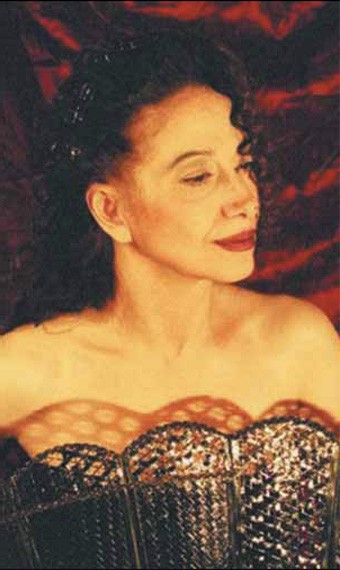
BEIRUT: Photographers hover around a slight woman, their cameras busily clicking and flashing. She wears a sleeveless black top and a long, sparkling silver skirt. A diaphanous white shawl is draped over her shoulders. Her thick curls surround a pale visage with dark eyes and fine features. Her lips are painted a deep red. She obliges the press with a sunny smile, playing the part of agreeable celebrity. Agreeable she is - sincere, warm and infectiously exuberant.

The French-Moroccan singer Sapho's two-night run at the French Cultural Center encapsulates Lebanon's recovery, marking one of the first international performances to be held in Beirut since the end of this summer's war. Prior to her first concert Tuesday night, she explained she had always wanted to perform in Lebanon but hesitated when people had told her the country hadn't become safe enough to receive her. Yet here she is, in the wake of Lebanon's least safe season in years.

Lebanon is "a country of conflict but also a country of encounters and of alterity," says Sapho, who harbors a lifelong attraction to cultures of clashing multiplicity. She says she came to Lebanon now both despite and because of the recent war. She wanted to make a statement of support and a gesture of understanding; she did not seek to simply distract a traumatized population with her music. After all, she is implicated by personal and artistic experience in the region's tumultuous history.

A Moroccan Jew born in Marrakesh, Sapho moved to France with her family when she was a teenager. After studying theater and music, busking on the cafe terraces of Saint-Germain-des-Pres and experimenting with numerous alter egos, she eventually adopted the stage name Sapho after the ancient Greek poetess. In the years that followed, she landed several record deals and performed in a dizzying variety of musical genres from American rock to flamenco and spoken word.

In 1992, she undertook Umm Kulthum's epic "Al-Atlal." Under the guidance of Lebanese orchestra conductor Elie Ashkar, Sapho managed to produce a critically acclaimed interpretation of the legendary song. "Al-Atlal" served as a defining moment, shifting Sapho's music toward an eclectic sound driven by Arabic and Andalusian influences. As she is fond of asserting, "I consider myself a citizen of the world and a singer of the world."

Sapho admits that despite an intellectual mastery of French, her singing voice moves more readily in Arabic - not classical Arabic but colloquial Moroccan, she explains, the language of her childhood and the language of the street, which melds her music into her political life. To sing in colloquial Arabic is to sing with the voice of the people.

Such a stance is not a matter of political ideology for Sapho but rather a means to convey honest and immediate experience. The political positions she takes, Sapho explains, embody her personal attempts to embrace her own culture: "We are, after all, simply subjects trapped in bodies, and our art is but a memoir of our experience."

In 1994, Sapho performed "Al-Atlal" to an audience of Israelis in Jerusalem. Four years later, she performed a seminal concert in Gaza. "Art is dangerous!" she exclaims, "whether one is politically engaged or not. To be an artist and a poet is to subvert language and to subvert meaning - to be subversive!"

Sapho's latest act of subversion involves setting Leo Ferre's classic songs to the flamenco guitar of Vicente Almaraz. First performed in the fall of 2005, the Ferre a la flamenco project continues to attract and charm audiences, having received abundant critical praise in France.

This is the repertoire Sapho brought to Beirut, aware that a Lebanese audience may feel the same formative love for Ferre as she does, having grown up with his erudite love songs, anti-war anthems and odes to anarchy.

"Ferre turned esoteric and inaccessible French poems into beautiful and popular music," she explains, and it is to this populist spirit of cultural engagement she pays homage.

The first of Sapho's two concerts opens with Almaraz's solo guitar. He has arranged the music in collaboration with Sapho, and it's clear from the inaugural melody that a distinctly Andalusian sound will characterize what follows.

Sapho appears on stage and slowly adjusts her shawl, leaning her torso forward to sing the opening lines of "Il N'Aurait Fallu" - a song set to a poem by Louis Aragon.

The words arise from her body like primal sounds that flirt with melody. She moves in and out of lyricism, lacing her notes with scratchy grit, bending her words to the stilted beats of speech. Her voice is at once grating and soothing, harshly guttural in its attacks and resonantly fluid in its releases. As the song unfolds, it is clear that she has succeeded in mastering Ferre's approach while preserving the recitative rhythms and poetic expression of Aragon's verse.

As she moves through a careful selection of Ferre's vast catalogue, singing favorites like "Est-Ce Ainsi Que les Hommes Vivent," "Monsieur William," "Avec le Temps" and "Comme a Ostende," Sapho proves herself as not only a singer with a striking voice, but also as a sensually theatrical and deftly charming stage presence.

"Isn't it strange," she quips, "that all these sad songs and depressed poets bring us nothing but happiness?"

As her final song comes to an end, the crowd asks for more, and Sapho impishly expresses her relief at being asked for an encore. The night's surprise guest, oud virtuoso Charbel Rouhana, waits in the wings. What comes next is the climax of the performance: a rendition of "Avec le Temps" sung in colloquial Moroccan followed by an excerpt from "Al-Atlal."

The crowd at the French Cultural Center is astounded. For those who know and love Umm Kulthum, Sapho's rendition is uncanny. For those who are not ardent fans of the original, Sapho's more accessibly modern approach is a revelation. The cante jondo ("deep song") of flamenco meets the soaring melisma of tarab and the results are nothing short of a fertile musical evolution.

Monday, October 09, 2006

More on Palestinian-Israeli Rap

From the Washington Post:

"Yo, Word Up, Arabz"

By Richard Morin
Thursday, April 20, 2006; A02

Think black rappers are angry? Well, check out this raging rhyme tossed down in Arabic by Arab Israeli rapper Tamer Nafar and his crew DAM:

You're a Democracy?
Actually it's more like the Nazis!
Your countless raping of the Arabs' soul
Finally impregnated it
Gave birth to your child
His name: Suicide Bomber
And then you call him the terrorist?

The song "Meen Erhabe" (or, "Who Is the Terrorist?"), released in 2001 over the Internet, became the first Arabic rap hit and spawned a new kind of rap that is spreading quickly throughout the Middle East, communications lecturer Usama Kahf of California State University at Long Beach says in an article under review by the Journal of Popular Music Studies.

A dozen rappers -- mostly Palestinians -- fill the Arab streets with rap and hip-hop beats, according to Kahf's review of the nascent genre. DAM is the best-known. The trio has toured throughout the Middle East and in Europe. Other acts have emerged in Algeria, Lebanon, Egypt and elsewhere. Several Web sites, notably ArabRap.net, serve as nerve centers for Arabic rap and help spread the music under the radar of government censors.

Still, many nonsecular Arabs view rap as another intrusion of Western culture and "an affront to [Arab] heritage or an imitation of the West," Kahf wrote.

Arabic rappers respond to the challenge by using traditional instruments behind familiar rap beats. They defend Arabic rap by contending in their rhymes that rap is the new universal musical language of marginalized people, Kahf said. And instead of rapping about Cristal and bling, they focus on social and political problems.

Sunday, August 20, 2006

More on Palestinian and Israeli and Palestinian-Israeli hip-hop


Article entitled "Levantine Hip-Hop 101: Who's who in the Middle East rap game," by Neal Ungerleider, appearing in Slate on Friday. The title of the article is misleading, for this is really about hip-hop in Israel and Palestine. Over the last year or so, a number of such articles have appeared in the US media. And like the others, on the Palestinian side, the article focuses on the Palestinian-Israeli group Dam. Ungerleider is incorrect about the Arabic translation for "Dam": it means "lasting" or "persisting," not "blood." (It's pronounced more or less like the English word "dam"; "blood" in Arabic is "damm," with a short "a" and a doubled "m.") Ungerleider offers more discussion of Israeli rappers than I've seen before. Like the previous articles, he discusses Israeli rapper Subliminal, who used to be close to Dam's leader Tamer Naffar but has since become right-wing. He also mentions Sagol 59 and Rebel Sun, who he says, are leftwing, unlike Subliminal.

But here's the most interesting piece of info: he announces an "Israeli and Palestinian Hip-Hop Showcase for Peace," to occur in New York City in September as part of the Jewish Music and Heritage Festival. The organizers call a "hip-hop sulha." A "sulha" is a traditional Palestinian mechanism that aims at peacemaking and reconciliation. The artists include (and I quote) "Top-selling Israeli hip-hop artist Shaanan Street of HaDag Nachash (whose last U.S. tour sold-out coast-to-coast); Palestinian rapper Saz (who has been the subject of two documentary films); Jewish American beatboxer Yuri Lane; the godfather of Jerusalem's underground hip-hop scene, Sagol 59; Orthodox Jewish rap sensation Y-Love; turntablist sensation DJ Spooky; DJ Handler; and the frontmen of two of the West Coast’s leading Palestinian hip-hop outfits, Ragtop of the Philistines and Omar of the N.O.M.A.D.S."

Tags: , ,

Wednesday, August 16, 2006

Struggling artisans remember when Iraq was better known for lutes than looting

From Agence France Presse: "Baghdad used to be renowned for the quality of lutes turned out by its artisans. Iraqi lutes were so sought after that special government permission was needed for them to be exported."

Tag:

Monday, August 07, 2006

Christina Aguilera & Elissa (Lebanon) Pepsi Commercial 2006

Christina bellydances!
Christina Aguilera & Elissa (Lebanon): Football Pepsi Ad

Da Da Da!

Tuesday, August 01, 2006

Arab Pop Tarts

Clips from Maria (Lebanon) and Ruby (Egypt)

Monday, July 31, 2006

Algerian Hip-Hop: MBS

From qantara.de, a piece by Arian Fariborz on Algerian rap group MBS (Le Micro Brise Le Silence). MBS dates the origins of rap in Algeria to the urban uprisings of 1988. I have a copy of the group's only CD released in the US, Le Micro Brise Le Silence, which is fabulous. I've not heard Rabah President, discussed here.

"In its country of origin, hip hop culture now seems to mean little more than hedonism, conspicuous consumption, and illusory ideas about violence and sex. In Algeria, the almost-forgotten potential of that culture is audible once again. Here, rap means speaking about reality, about an everyday life that is often frankly depressing, about political injustice, terror and war."

Monday, July 17, 2006

Article on Shaaban Abdel Rahim


From Transnational Broadcasting Studies (TBS) 16, a very useful article: "The Fool Sings a Hero's Song: Shaaban Abdel Rahim, Egyptian Shaabi, and the Video Clip Phenomenon," by James R. Grippo, UCSB PhD candidate in ethnomusicology.

Here's the last paragraph:
Contributing to ‘Abd al-Rahim’s controversial success is his social positioning as the next superstar descending from a historic line of political sha‘bi singers in Egypt. Finally, ‘Abd al Rahim’s success must be understood in the context of the West’s loosely defined War on Terror. The perception of cultural and political attack from outside the Arab world has sparked the need for amplified voices speaking sympathetic truths to a self-consciously cornered Muslim population. ‘Abd al-Rahim’s uncanny sense of Arab anger and frustration has enabled this illiterate ironer from Mit Halfa to become one of the loudest of these voices.

Thursday, July 13, 2006

Lebanese vocalist Rima Khcheich: splicing the Eastern classical and jazz idioms


Jim Quilty, writing in the Daily Star, on a Lebanese female singer in the vein of Ziad Rahbani.

Meanwhile, Ziad's mother Fairuz had her Thursday concert at the Baalbek International Festival "delayed" due to what the US press insists on calling Israel's "crossing" into Lebanon.

Monday, July 03, 2006

Iranian rock and hip-hop

An interesting story on NPR, reviewing a documentary called "Sounds of Silence," by Amir Hamz and Mark Lazarz, on Iranian rock and rap. It includes samples from O-Hum, Barobax and Hich-Kas.

Go here to view a video by rap group Hich-Kas. Download songs by Hich-Kas here. Go to the Wikipedia article on Hich-Kas to find more zipped mp3s.

Thursday, April 27, 2006

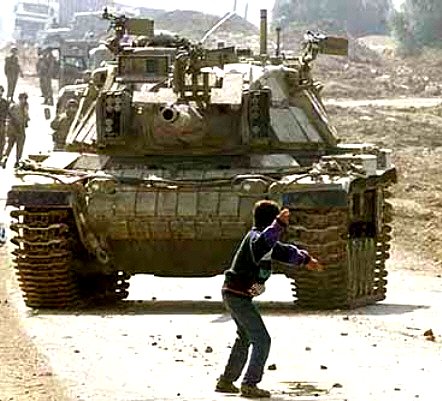
Palestinian stone thrower

Typical image from the first intifada (1987-1993)

Lyrics for "Biladi" (Motherland) and "Ana Samid" (I Remain Steadfast)


(from Palestine Lives! Songs from the struggle of the people of Palestine, Paredon Records, 1974.)

Biladi
Motherland, motherland
Fat'h is a revolution against the enemy
Palestine, the land of our forefathers
To you we will return
Fat'h is a revolution that shall win
Assifa is the hope of my motherland

Palestine, oh great love,
You are my goal and my destiny.
To you I walk, and my determination
Shall overcome oppression

Palestine, birthplace of Christ,
Destination of Muhammad's journey,
Liberate my wounded land,
Cleanse from it the usurpers.

Palestine, my only hope,
To you we shall restore
The dignity of our destitute people,
Under the banner of protracted struggle.

Palestine, your people shall not die
It shall defy silence, and Assifa
Shall keep the finger on the trigger.

Assifa walks there,
Planting the land with explosives
Loaded with destruction and doom
For every exploiter of the motherland

Samid (I Remain Steadfast)
I am steadfast, steadfast, I am steadfast
In my homeland, I am steadfast.
If they snatch away my bread, I am steadfast
If they murder my children, I am steadfast
If they blow up my house, O my house
In the shadow of your walls, I am steadfast

With pride, I am steadfast
With a stick, with a knife, I am steadfast
With the flag in my hand, I am steadfast
And if they cut off my hand and the flag
With the other hand, I am steadfast

With my field and my garden, I am steadfast
With determination in my beliefs, I am steadfast
With my nails and my teeth, I am steadfast
And if wounds in my body should multiply
With wounds and my blood, I am steadfast

Fayruz, "Sanarni'ju Yawman" (We Shall Return Someday)


O Heart, slow down,
Do not throw yourself
In exhaustion on the road of return
For it pains us to see that tomorrow
The flocks of birds will return
While we still remain here

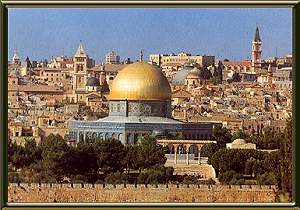
Lyrics for Fayruz, "Zahrat al-Mada'in (The flower of cities)"


These are excerpts, from Joseph Massad's article, "Liberating Songs"

It is for you that I pray, O city of prayers
For you I pray, O Jerusalem

The gate of our city shall not be locked,
For I shall got to pray.
I shall knock at the gates,
And I shall open up the gates
O River Jordan, you shall wash
My face with your holy water
And you shall erase, O River Jordan
The remaining footprints of the barbarians.

For Jerusalem is ours, and the house is ours
With our own hands we shall restore the glory of Jerusalem
With our own hands, we shall bring peace to Jerusalem
Peace shall come to Jerusalem

Tuesday, April 25, 2006

Lyrics for DAM's "Who's A Terrorist?" (Min Irhabi?)


Who's a terrorist?
I'm a terrorist?!
How am I a terrorist when you've taken my land?
Who's a terrorist?
You're the terrorist!
You've taken everything I own while I'm living in my homeland
You're killing us like you've killed our ancestors
You want me to go to the law?
What for?
You're the Witness, the Lawyer, and the Judge!
If you are my Judge
I'll be sentenced to death
You want us to be the minority?
To end up the majority in the cemetery?
In your dreams!

You're a Democracy?
Actually it's more like the Nazis!
Your countless raping of the Arabs’ soul
Finally impregnated it
Gave birth to your child
His name: Suicide Bomber
And then you call him a terrorist?

You attack me and then you cry
And then you rush to complain about me [to the world]
When I remind you that you started the whole thing,
You jump to say
"You let small children throw stones!
Don’t they have parents to keep them at home?"
WHAT?!
You must have forgotten you buried our parents under the rubble of our homes
And now while my agony is so immense
You call me a terrorist?

Who's a terrorist?
I'm a terrorist?
How I am a terrorist
When you've taken my land?!
Who's a terrorist?
You're the terrorist!
You've taken everything I own
While I'm living in my homeland

Why terrorist?! Because my blood is not calm
It's boiling!
Because I hold my head for my homeland
You've killed my loved ones
Now I'm all alone
My parents driven out
But I will remain to shout out
I’m not against peace
Peace is against me
It’s going to destroy me

You don't listen to our voices
You silence us and degrade us
And who are you?!
And when did you became ruler?
Look how many you've killed
And how many orphans you've created
Our mothers are crying
Our fathers are in anguish
Our land is disappearing

And I'll tell you who you are!
You grew up spoiled
We grew up in poverty
Who grew up with freedom?
And who grew up in confinement
We fight for our freedom
But you've made that a crime
And you, the terrorist call me the terrorist!

Who's a terrorist?
I'm a terrorist?
How I am a terrorist
When you've taken my land?!
Who's a terrorist?
You're the terrorist!
You've taken everything I own
While I'm living in my homeland

So when will I stop being a terrorist?!
When you hit me and I turn the other check
How do you expect me to thank
The one who harmed me?!

I tell you what!
You tell me how you want me to be!
Down on my knees with my hands tied up
My eyes to the ground
Surrounding by bodies
Houses destroyed
Families driven out
Our children orphaned
Our freedom chained up

You oppress
You kill
We bury
We'll remain patient
We'll suppress our pain
Most importantly you feel secure
Just relax and leave us all the pain
You see our blood is like that of dogs

NOT EVEN

When dogs die they receive sympathy
So our blood is not as valuable as a dogs
No - My blood is valuable
And I will continue defending myself
Even if you call me a terrorist